

Most students don't fail because they can't study. They fail because the study habit was never designed to survive a normal, tired, distraction-filled day. The panicked all-nighter marathon that starts in exam week collapses the week after, because it was built for your best days, not your worst ones. A study habit that sticks has nothing to do with motivation or willpower — it's about making the behavior so small, so fixed, and so visible that not studying feels stranger than studying.
Here's how to build one that lasts.
Why inconsistent studying breaks (and it isn't laziness)
The usual story is that we "just need a bit more discipline." That's rarely the real issue. Study habits collapse for structural reasons:
- The target is too big ("I'll study four hours today"), so a tired evening becomes an all-or-nothing failure.
- There's no fixed time or place, so studying competes with every other thing you could do.
- Progress is invisible, so a good week and a bad week feel exactly the same.
Fix the structure and the discipline problem mostly disappears.
Fix a time and a place
A habit needs a cue it can hang on. Instead of "study more," anchor studying to a specific time and a single place:
- After dinner, I study for 25 minutes at the kitchen table.
- After I get home and change out of my school clothes, I sit down at my desk.
- After I pour my morning coffee, I do one problem set before touching my phone.
The word "after" is doing the heavy lifting. The same time and the same place signal your brain, every single time, that it's now study time. Bolting a new behavior onto a fixed cue borrows that automaticity instead of relying on you to remember. Simplify the place too: put the phone in another room and keep only the material you need on the desk.
Start with one short duration block
The single most reliable move is to shrink the habit until it's almost embarrassing. Make the target not "study four hours" but one 25-minute block. Small enough that you can do it on your worst day, when you're exhausted.
This feels like cheating. It isn't. The point of the early weeks is not to learn a lot — it's to prove to yourself, every day, that you are someone who studies. Once that identity is in place, the duration takes care of itself. Almost nobody stops at exactly 25 minutes; the hard part was sitting down.
In Zinciri Kırma you track this as a duration task ("studied 25 minutes today"). Keep that first threshold low enough that you can't miss it — if you keep going after the block ends, great, but the link is already forged.
The don't-break-the-chain method
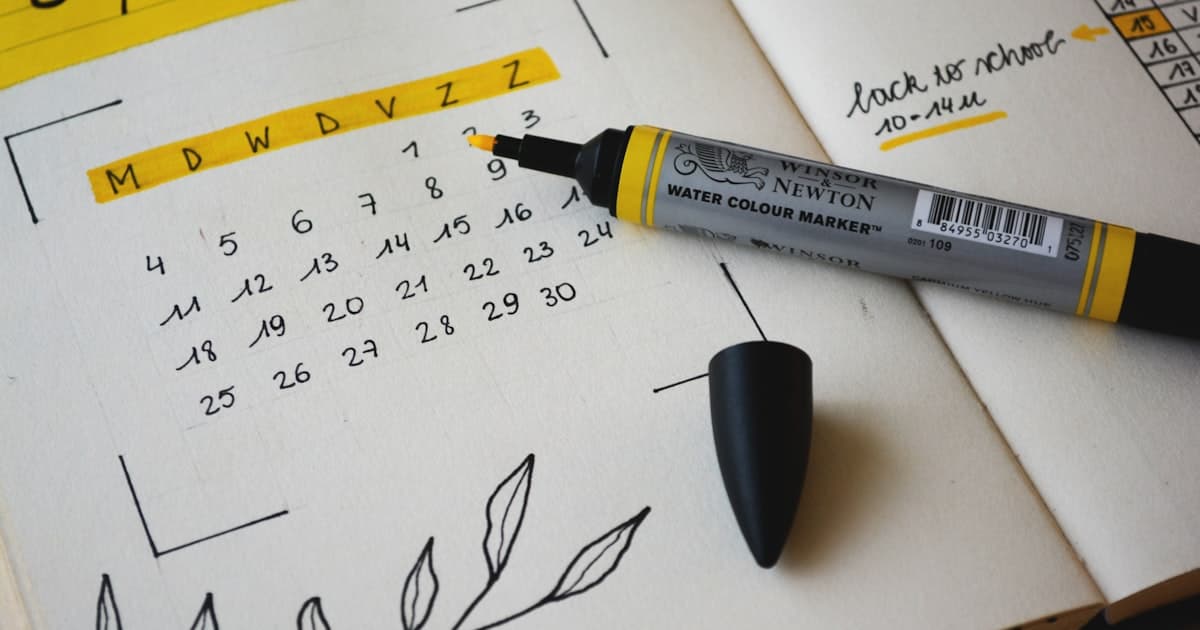
This is the method that gives Zinciri Kırma its name. The idea is often attributed to comedian Jerry Seinfeld: put a big calendar on the wall, and for every day you do the work, mark a large X. After a few days you have a chain. After a few weeks you have a chain you don't want to break.
The chain works because it flips your motivation. You stop asking "do I feel like studying today?" and start protecting a streak you've already built.
Every day you study, the link is forged. The visible, growing chain becomes its own reason to keep going — and the longer it gets, the more it protects itself.
Protect exam-break and rest days with a planned skip
You don't have to study every day — rest is part of learning. A burned-out brain doesn't retain anything. But here's the trap: an "every day" goal makes you feel guilty the moment you rest.
This is exactly what a planned skip is for. Mark the day after a big exam, or one rest day a week, as a skip in advance. That way a day off doesn't break the chain, because it was part of the plan from the start. The missed day becomes a protected pause, not a source of shame. Zinciri Kırma's flexible chain mode is built for exactly this: instead of "every day," you set a rhythm like "five days a week" and let life choose which days.
Escape the all-or-nothing trap
The single biggest thing that wrecks consistent studying is perfectionism. When you miss a day and think "the streak's broken, forget it," you turn one slip into a full collapse.
The rule that matters: never miss twice. One missed day is an accident; two in a row is the beginning of a new (non-studying) pattern. So the day after a miss, do a single 15-minute block. That's it. Don't try to "make up" the lost hours — punishing yourself with a giant marathon only makes tomorrow feel heavier. A good system builds this forgiveness in on purpose, so an honest off-day doesn't wipe out weeks of work.
A simple 30-day starter plan
- Days 1–7: Study one 25-minute block a day, at a fixed time in a fixed place. That's the entire goal. Mark each day.
- Days 8–21: Keep the same time and place, switch to flexible chain mode, and reserve one rest day a week as a skip. Let the blocks grow naturally.
- Days 22–30: Notice the chain. You now have three weeks of links. Studying is no longer a decision you make each evening — it's just what you do.
By day 30 you won't be trying to study. You'll be someone who sits down every day and happens to be tracking a chain — and studying will feel less like effort and more like a natural part of the day.